Unlocking Mid-Game Power: How Smart Positioning Shapes Your Ludo Wins
December 23, 2025
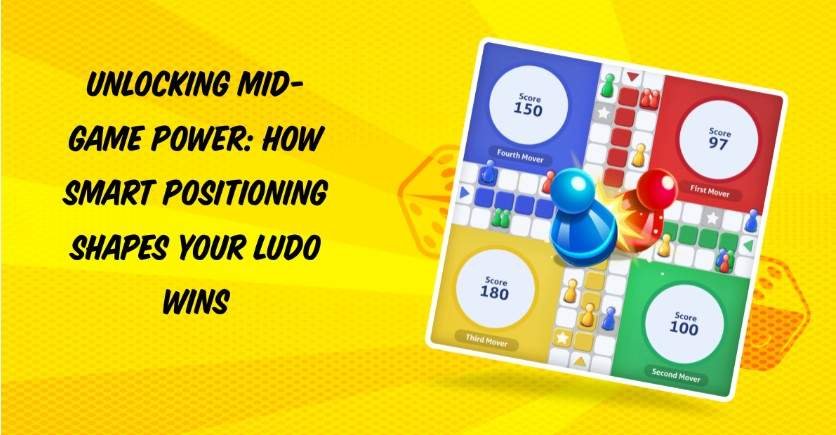
The mid-game in Ludo is where matches quietly shift in one direction or another. Early rolls decide which tokens enter the board, and the end-game decides who reaches home first—but the true battle happens in the space between. The mid-game is where strategy overtakes luck, and the way you position your tokens determines whether you control the board or simply react to it.
Whether you play on a traditional board or digital versions like online ludo, smart mid-game decision-making stays the same. Once the board opens up and multiple tokens are active, positioning becomes your most valuable tool. It’s not about rolling the perfect number; it’s about placing your tokens where they create pressure, protection, and opportunity at the same time.
Below are the core mid-game positioning principles that often separate consistent winners from average players.
1. Spread Out Your Tokens to Control Space
What you’ll see
Many players—especially beginners—concentrate on pushing one token as far forward as possible. Others keep their tokens clustered, moving whichever one feels safest at the moment. Both habits create predictable weaknesses.
Why spacing matters
A spread-out formation gives you coverage across the board. With tokens positioned in different regions, you gain:
- More cutting opportunities
- More blocking possibilities
- More flexibility when the dice offer multiple moves
- More psychological pressure on opponents
A single token far ahead looks impressive, but four tokens distributed around the track is far more powerful.
How to use this in mid-game
- Aim to place one token in each quarter of the board.
- Don’t push one piece blindly—balance progress across all active tokens.
- Watch for opponents who stack tokens too closely; they are easier to pressure or cut.
Spacing doesn’t just improve your chances—it shapes the entire flow of the mid-game.
2. Stay Within 1–6 Steps Behind Opponents
What you’ll see
- Some players rush forward without considering who is behind them. Others freeze the moment a threat appears.
- Mid-game positioning thrives on a simple concept: threat range.
Why staying behind works
If you stay within 1–6 spaces of an opponent, they feel the constant risk of being cut. This forces them into suboptimal choices:
- Staying parked on safe squares
- Avoiding forward progress
- Moving low-value tokens
- Breaking their formation
You don’t even need to cut them—just being in range controls their next few turns.
How to apply this mid-game
- Shadow greedy players who push one token too far ahead.
- Walk opponents into danger zones by controlling the timing of your moves.
- Avoid being within 1–6 squares in front of aggressive players; adjust your pace instead.
This single mechanic—being right behind someone—shapes mid-game behavior more strongly than many players realize.
3. Use Safe Spots as Anchors, Not Hiding Places
What you’ll see
- Some players will camp in these safe spaces forever. Then there are players who will not camp in these safe spaces at all. They will move
- The best mid-game players do not think of safe places as anchoring points but rather as temporarily safe zones.
Importance of Anchors
Anchors provide stability. A strongly placed token in a safe location can:
- Stabilize a vessel
- Opponent Move Blocking
- Control a lane
- Establish a launch pad for future cut removal
- Protect you from retaliation
A Ludo King treat anchors as dynamic positions. They rotate tokens through safe areas to maintain pressure while continuing forward progress, rather than allowing pieces to stagnate.
How to Use Anchors Effectively
- Maintain a safe square until you can control the space, and then leave when opportunities arise.
- Move all but one freely, fix one.
- A safe spot with multiple tokens can be avoided to not waste mobility.
Use safe squares to reboot the timer when playing on an unpredictable board. Anchors are tools, not hiding spots, and in the middle of a game, they reward players for using them as such.
Anchors are tools not hiding places and mid-game rewards players who treat them that way.
4. Don’t Rush Into the Home Stretch Too Early
What you’ll see
Many players sprint toward home as soon as a token crosses the final quadrant. The rush feels exciting but it creates vulnerability.
Why early rushing weakens your mid-game
Once your token enters the home path, it loses cutting and blocking potential. Meanwhile, opponents still have full control of the outer board.
This shift creates two problems:
- You lose influence over the main track.
- Opponents may regroup and pressure your remaining tokens.
How to manage this intelligently
- Move one token toward home, but keep others in positions that maintain board control.
- Don’t abandon mid-game pressure too early; it often leads to late-game disadvantages.
- Watch opponents who rush home—they leave lanes unguarded and tokens exposed.
Good mid-game play means balancing advancement with presence.
5. Read Timing in Fast-Paced Multiplayer Games
In multiplayer games, mid-game positioning becomes even more complex. The board fills with tokens, threats multiply, and timing becomes more important than distance.
What to watch:
- Who is about to enter your threat range
- Who is sitting on safe spots too long
- Who keeps switching tokens impulsively
- Who is pushing too far ahead without support
Fast matches whether offline or online Ludo make timing errors more visible. One poorly timed move can expose multiple tokens at once.
Use every roll to adjust positioning based on what’s happening now, not what you hoped the next roll would be.
Conclusion
The mid-game is where Ludo shifts from simple movement to meaningful strategy, and smart positioning becomes the real difference-maker. When you spread your tokens, control the threat ranges behind opponents, use safe spots as temporary anchors, and manage timing with awareness, you shape how every other player moves on the board. These choices may seem small in the moment, but they build into a powerful advantage that determines who enters the end-game with control and confidence. Whether you’re playing casually, competing with friends, or navigating digital versions like online ludo and other multiplayer games, your mid-game positioning remains the key force that quietly drives your chances of winning.