Types of Dividend Policy: Understanding the Different Approaches
November 19, 2025
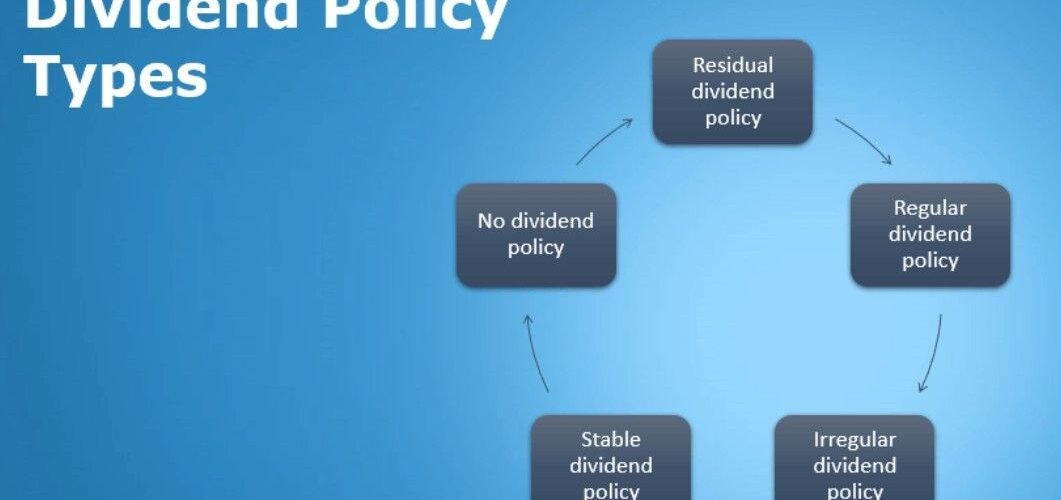
When you are controlling the profits of a business the main decision to be made is the way to distribute profits between shareholders. The decision will be influenced by the different types of dividend policy that a business adopts. It is a Dividend policy will determine the amount of profits a company can pay in dividends, versus investing it back into its business. In this post, we’ll examine the various kinds of dividend policies and their characteristics benefits, disadvantages, and advantages to help you to comprehend how companies take dividend distribution.
What are the Types of Dividend Policy?
The kinds of dividend policies are a variety, based on the financial health of a business and growth prospects as well as the sector within which it operates. There are many approaches to consider that each have distinct advantages for both investors and businesses. Let’s take a look at the most popular kinds of dividend policies.
1. Stable Dividend Policy
The steady dividend plan is among the most well-known kinds of dividend policies. According to this policy, companies aim to pay a regular or gradual increase in dividends in the course of time, regardless of earnings fluctuations. This strategy ensures shareholders have a stable income stream.
Key Features:
-
Dividends are paid out regularly with small increases as time passes.
-
Most often, these are used by mature businesses with steady profit.
-
This policy was designed in order to provide the dividends that investors can count on to be predictable.
Advantages:
-
It is predictable for investors, and gives them the feeling that financial safety.
-
Enhances the confidence of shareholders, especially for investors who are focused on income.
Disadvantages:
-
If earnings fall, sustaining an even dividend may become difficult.
-
Limits the amount of money available to reinvest to help the company grow.
2. Constant Payout Ratio Policy
The continuous payout ratio policy is a method of distributing a predetermined proportion of earnings in dividends. This implies that the dividend amount will fluctuate based on the business’s performance during a specific time.
Key Features:
-
Dividends are a predetermined percentage of the company’s net profits.
-
The dividend increases depending on the company’s profit.
-
Employed by companies that have high-risk earnings.
Advantages:
-
Assures that dividends are tied directly to the company’s performance.
-
Flexible for the business and allows for adjusting dividends in periods of low profit.
Disadvantages:
-
The dividend amount is unpredictably, making it challenging for investors to forecast their income.
-
In times of low earnings The dividend may be reduced significantly.
3. Residual Dividend Policy
In the residual dividend policy A company is required to pay dividends only after it has fulfilled its investment requirements. The company allocates the funds to invest in profitable opportunities Then, any profits that remain are divided into dividends.
Key Features:
-
Dividends are paid after the investment has been funded.
-
The amount of dividends paid out is dependent on the amount of money left after the investment.
-
Ideal for companies with strong potential for growth.
Advantages:
-
Prioritizes reinvestment in the business and helps ensure that future growth is funded.
-
Flexible as dividends depend on the amount of earnings available after investing.
Disadvantages:
-
Dividends are subject to uncertainty and could fluctuate according to the needs of the business’s investors.
-
Investors looking for regular income could not find this policy appealing.
4. No Dividend Policy (Dividend Reinvestment Policy)
An No dividends policy or a dividend reinvestment plan, will see a company opt to keep its entire earnings instead of distributing them in dividends. This practice is usually adopted by businesses in the growth phase, when returning profits to the business is thought to be the most efficient way to earn future profits.
Key Features:
-
The company does not pay dividends and profits are reinvested into the business.
-
A common theme among startups and high-growth businesses.
-
Investors may choose to invest their profits via the dividend reinvestment program (DRIP).
Advantages:
-
Maximizes the potential for growth by investing profits into high-return investments.
-
It is ideal for companies who want to grow their business.
Disadvantages:
-
Investors do not receive immediate cash returns.
-
It is unlikely to appeal to those who seek income.
5. Lump-Sum or Special Dividend Policy
It is a lump sum dividend policy (or Special dividend policies) is a method of paying a business an all-in-one, huge dividend. The dividend is usually paid in cases where the company has surplus funds or cash reserves, and doesn’t require the funds to invest.
Key Features:
-
A huge single dividend is paid, generally during periods of high profit.
-
This happens when a business has excess cash that isn’t needed to be used immediately.
-
Sometimes, it is issued in specific situations, like after selling an asset or significant business deal.
Advantages:
-
Gives investors a substantial immediate dividend.
-
It offers a large dividend without having to commit to regular dividends.
Disadvantages:
-
It is not sustainable as a dividend policy.
-
The company could not offer similar payouts in the future.
Star Comprehensive Insurance Policy: The Ultimate Health Protection for You and Your Family
Comparison of the Types of Dividend Policy
Here’s a quick look at the kinds of dividend policies:
| Type of Dividend Policy | Best For | Advantages | Disadvantages |
|---|---|---|---|
| Stable Dividend Policy | Established companies with steady earnings | Investors can be assured of a predictable income | It is difficult to maintain in bad years |
| Constant Payout Ratio | Companies that have variable earnings | Flexibility based upon company performance | Unpredictable dividend payments |
| Residual Dividend Policy | High-growth companies | Maximizes growth and reinvestment | Unpredictable dividend payments |
| No Dividend Policy | High-growth startups | Maximizes future growth and reinvestment | There are no immediate returns for investors |
| Lump-Sum Dividend Policy | Companies that have excess cash reserves | One-time large payout | Insufficient as a normal policy |
Conclusion: Choosing the Right Type of Dividend Policy
Selecting the best Types of Dividend Policy is essential for businesses because it impacts both their financial flexibility as well as their appeal to investors. It is essential for companies to balance the need to reinvest to grow while also offering regular dividends to shareholders. For investors, knowing the kinds of dividend policies can assist them in making choices based on their income requirements and strategies for investing.
If you’re looking for a predictable source of income and a predictable stream of income, you’ll find a steady dividend policy could be a good fit for you. If, however, you’re an investor who is focused on growth in the long term and capital appreciation then a non-dividend or no dividend policy or the residual dividend policy could be more appealing.